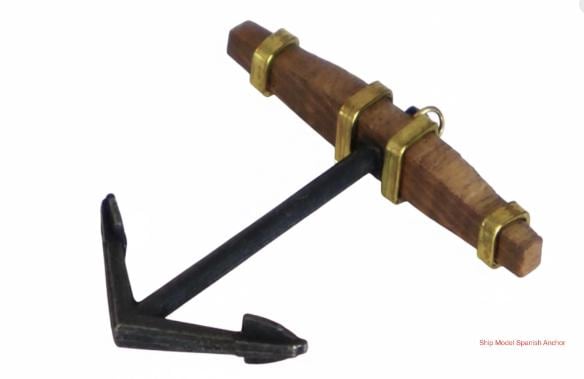
Ship model anchors are crucial scale fittings that depict a variety of contemporary and historical designs for securing ships to the ocean floor. They usually have a central shank, curving limbs that finish in ground-dwelling flukes, and frequently a stock (crossbar) to aid in proper anchor positioning. In modeling, these are often proportioned according to the shank's length and constructed from materials that correspond to the ship's age, such as wood, brass, or cast metal.
Common Anchor Types for Models Different ship eras and sizes require specific anchor styles to remain historically accurate:
Admiralty (Fisherman’s) Anchor: The classic "Age of Sail" design featuring a long shank, two flukes, and a prominent crossbar (stock). For models, these often come with separate wood or metal stocks for authentic detail.
Stockless (Navy) Anchor: A modern design without a stock, allowing it to be pulled directly into the hawse pipe for easy stowage. It is the standard for most 20th-century and contemporary ship models.
Kedge Anchor: A lighter, smaller version of the main anchors used for "kedging" (warping) a ship or for temporary mooring. These are often found lashed to the channels or stowed on deck in wooden ship kits.
Grapnel Anchor: Consists of a shank with four or more curved tines; commonly seen on models of small boats, lifeboats, or for "hooking" items from the seabed. · Modern Specialty Anchors
Models of yachts or smaller modern vessels may feature Danforth (Fluke) anchors with flat, pivoting blades or Plow/Bruce anchors designed for specific seafloor types