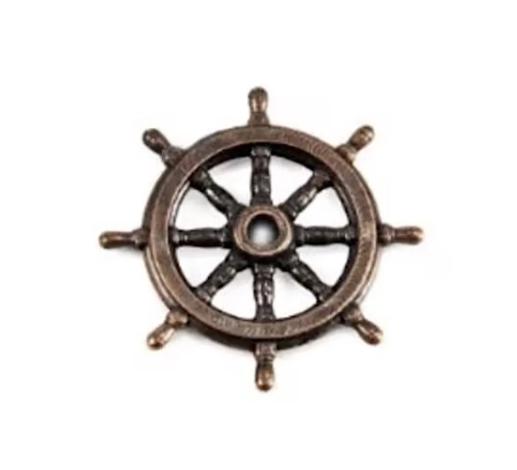
Model ship wheels (helms) are essential miniature fittings used to complete the deck detailing of scale model boats. When choosing a steering wheel for your model, keep these specifications in mind: Period and type of your model Scale and Size: Match the outer diameter of the wheel to your ship's specific scale. Common miniature diameters range from tiny 14mm wheels up to 38mm or larger options. Material o Wood (Boxwood/Walnut): Best for authentic period-accurate wooden sailing ships.Brass/Metal: Offers clean, durable lines and a premium finish.
The ship’s wheel, also known as the helm, evolved to provide greater mechanical advantage as vessels grew larger. It transitioned from early manual tillers to rope-and-pulley drum systems in the 18th century, eventually giving way to modern, automated hydraulic and electronic joystick steering.
Early Steering: Oars and Tillers Before the wheel, vessels were steered using steering oars mounted over the side. By the dawn of the Age of Sail, these oars evolved into stern-mounted rudders controlled by a tiller—a direct lever attached to the rudder post. While effective for small boats, a simple tiller became incredibly difficult to manage on large warships and merchant vessels.
The Whipstaff Era (17th Century) As ships grew, a device called the whipstaff was introduced. This was a long vertical wooden pole connected to the tiller below decks. By pushing the whipstaff left or right, a helmsman could pivot the tiller, but it offered very little mechanical advantage, required brute strength, and restricted the helmsman’s line of sight. At the turn of the 18th century (circa 1700-1703), the British Royal Navy introduced the first wheel-and-axle steering systems. By connecting the wheel to a drum, lines (ropes) could be used to pull the tiller smoothly side to side. This design, typically featuring eight spokes for maximum leverage and grip, quickly became a universal standard and allowed two or more sailors to steer a ship even in heavy weather.